Nestled on the shores of the Bay of Bengal in the state of Tamil Nadu, the Shore Temple is one of the crown jewels of classical Indian architecture. Built in the eighth century, this temple complex is not only a place of worship, but a monument to the audacity of ancient builders who defied the sea and time. Today, it is recognized as a UNESCO World Heritage Site.
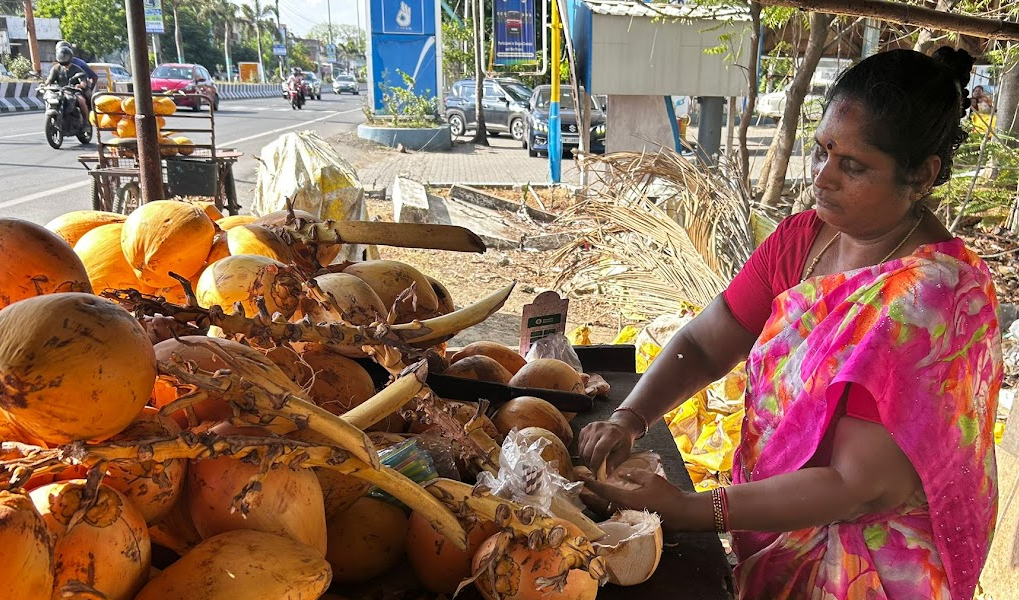
The temple is easily accessible from Chennai, India, on a route of about 60kms. If it’s hot, you can always stop to drink coconut water on the way (several points of sale on the road).
A little history
The Beach Temple was erected during the reign of the Pallava dynasty, more specifically under the rule of Narasimhavarman II (also known as Rajasimha), between the years 700 and 728 AD. Unlike many other Mahabalipuram monuments that were carved directly into the rock (such as the famous Pancha Rathas), the Shore Temple is a structural temple, built with hewn granite blocks.
For centuries, European sailors sailing along the coast referred to Mahabalipuram as “The Seven Pagodas.” Legend had it that the Shore Temple was only the last survivor of a complex of seven magnificent temples; the other six would have been swallowed by the ocean.
What seemed to be just a myth gained contours of reality in 2004, during the devastating Indian Ocean Tsunami. Moments before the waters advanced, the sea receded hundreds of meters, exposing to the world submerged ruins, temple foundations and stone sculptures that had been hidden for centuries. Subsequent archaeological excavations confirmed that the complex was, in fact, much larger than previously imagined. Traditionally, the city was known as Mahabalipuram due to the legend of King Mahabali, a generous and wise demon king from Hindu mythology who was defeated by Vamana, an avatar of the god Vishnu.
The original and historically most accurate name of the city is Mamallapuram. This name was given in honor of the Pallava king Narasimhavarman I (7th century), who was a formidable fighter and held the title of Mamallan (meaning “the great fighter”). It was under his reign that most of the city’s rock art began to be carved.
Over the past few decades, there has been a conscious effort on the part of the Tamil Nadu government to revitalize the local cultural and linguistic identity.
The name was officially changed back to Mamallapuram to:
- Pay homage to King Pallava who founded the grandeur of the city.
- Moving away from the Anglicization and influence of narratives that did not correspond to the regional history of the state.
Although “Mamallapuram” is the current official name on government tablets and documents, the term “Mahabalipuram” is still widely used by tourists and locals in everyday life.
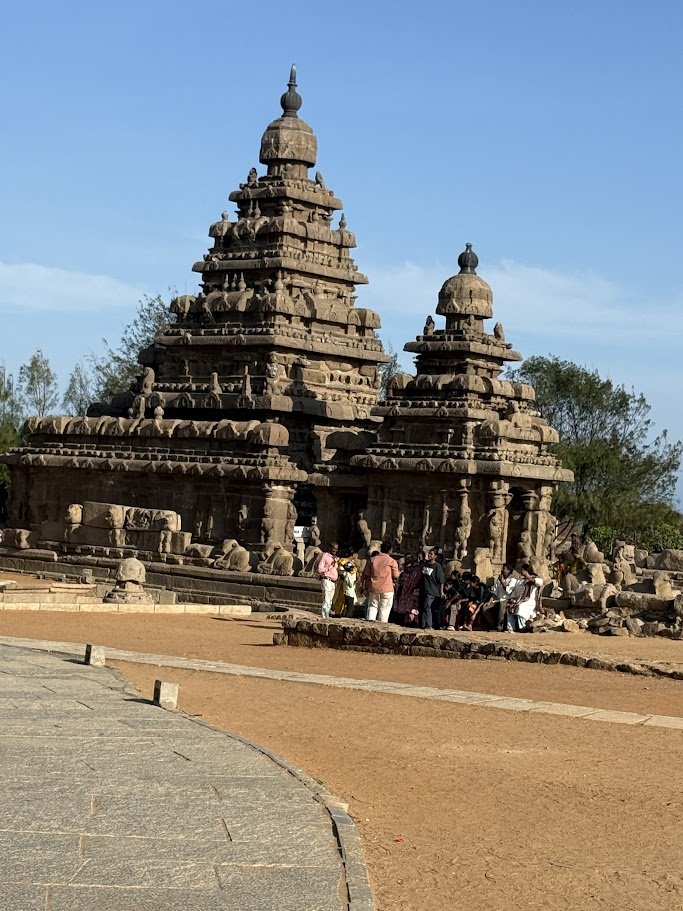
The Shore Temple complex is unique because it houses shrines dedicated to both Shiva and Vishnu, the two main currents of Hinduism, which demonstrates the religious pluralism of the time.
- Major Temple (Virupaksha): Facing east, so that the first rays of the sun touch the deity. Dedicated to Shiva.
- Minor Temple: Facing west, also dedicated to Shiva.
- Central Shrine: Positioned between the two, it holds an image of Anantashayana Vishnu (Vishnu lying on the cosmic serpent, Shesha).
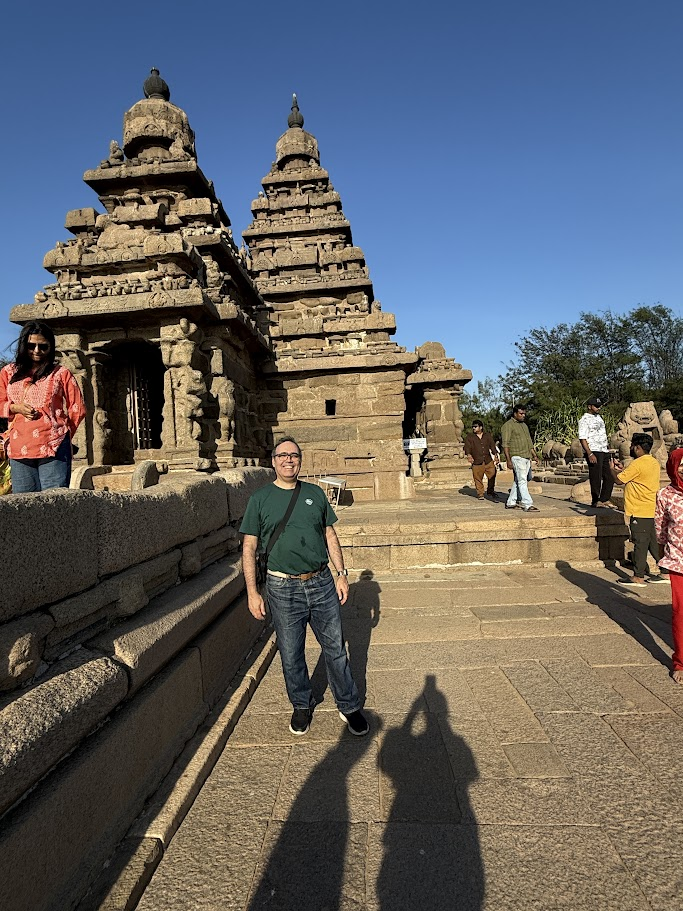
The exterior of the temple is decorated with hundreds of sculptures, including the iconic Nandi bull (Shiva’s mount), which surrounds the walls of the complex, watching over the ocean eternally.
Pedro Coelho